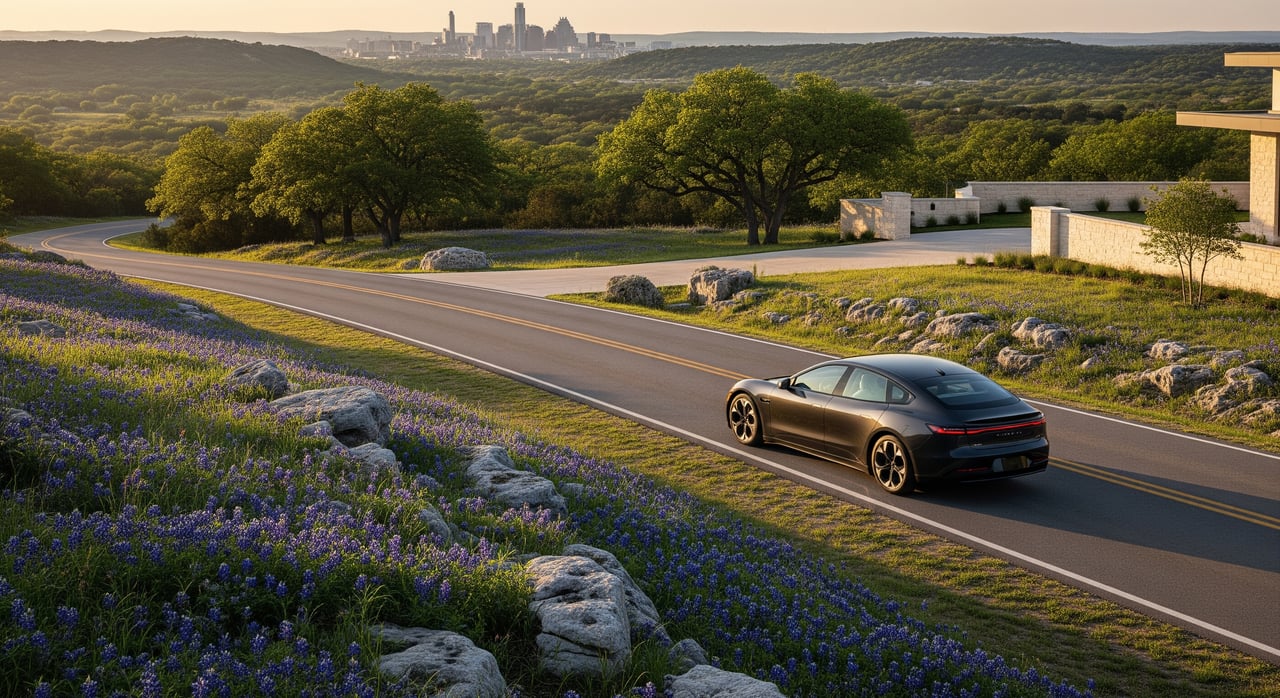
Can you live in Georgetown and work at The Domain, Apple, or Tesla without losing hours to traffic each day? If you’re weighing a move, commute time is one of the biggest variables to get right. In this guide, you’ll get realistic time ranges, best‑bet routes, park‑and‑ride options, and smart tradeoffs so you can choose a home that fits your life and your schedule. Let’s dive in.
Georgetown commute snapshot
Georgetown sits about 20 to 30 miles north of central Austin. North Austin tech hubs like The Domain and Apple lie south‑southwest of Georgetown, while Tesla’s Gigafactory is southeast of central Austin in Del Valle, which is a different direction and usually a longer trip.
- Peak windows: roughly 6:30–9:00 AM inbound and 4:00–7:00 PM outbound.
- Typical off‑peak to North Austin: 30–45 minutes.
- Typical peak to North Austin: 45–75+ minutes depending on incidents and exact endpoints.
- To Tesla (Del Valle): off‑peak 45–70 minutes; peak 60–100+ minutes is common.
Primary corridors include I‑35 for most North Austin trips, US‑183/Parmer and MoPac for last‑mile access, and SH‑130 as a toll bypass that helps most for southeast or cross‑town routes.
Routes to The Domain
Typical corridors
- I‑35 South, then connect to US‑183/Braker or MoPac, depending on your exact office location.
- Alternative: cut across via RM‑2243 or Pflugerville Parkway to reach US‑183/Parmer and avoid the most congested I‑35 segments when conditions allow.
Time and distance
- Distance: about 25–30 miles from central Georgetown neighborhoods.
- Off‑peak: 30–45 minutes.
- Peak: 40–65+ minutes; incidents and construction can push it higher.
Common bottlenecks
- I‑35 through Round Rock and Pflugerville.
- US‑183 junctions near Braker and MoPac.
- Intersections near major retail nodes around The Domain.
Practical tips
- Consider a hybrid approach: drive to a Park & Ride or rail station in the Leander/Lakeline area, then finish the last mile by bus or rideshare.
- If your schedule is flexible, shifting arrivals before 7:30 AM or after 9:00 AM often improves predictability.
Routes to Apple
Typical corridors
- I‑35 South to Parmer Lane/US‑183.
- Or use RM‑2243/RM‑734 to US‑183/Parmer, based on the Apple site you report to.
- MoPac is an option from the west but is usually less direct from Georgetown.
Time and distance
- Distance: about 25–35 miles, depending on the campus location.
- Off‑peak: 30–50 minutes.
- Peak: 45–75+ minutes.
Bottlenecks
- I‑35 and Parmer interchanges.
- US‑183 congestion during peak hours.
- Local arterials near Tech Ridge.
Practical tips
- Large employers sometimes offer flexible start times or shuttles. Check your team’s options to reduce peak exposure.
- Map both I‑35 and Parmer routing during your target arrival window and compare over several days before you decide on a home.
Routes to Tesla
Direction and route strategy
Tesla’s Gigafactory in Del Valle is southeast of central Austin. From Georgetown, that usually means crossing or bypassing central Austin.
- I‑35 South through central Austin, then east/southeast via US‑183 and local connectors.
- SH‑130 toll road south on the east side to minimize central congestion.
Time and distance
- Distance: often 40–55 miles depending on route.
- Off‑peak: 45–70 minutes.
- Peak: 60–100+ minutes. Expect more variability than North Austin trips.
Practical tips
- For many drivers, SH‑130 improves reliability to Del Valle, but factor toll costs into your monthly budget.
- Tesla has offered employer shuttles and organized commute programs. If available, these can materially improve your day.
Transit and shared rides
Park & Ride and rail
- Capital Metro operates the Red Line commuter rail and Park & Rides. A common strategy is to drive from Georgetown to Leander or Lakeline, ride rail or an express bus, and use a rideshare for the last mile. This often trades a bit of time for predictability during heavy traffic.
Regional options
- CARTS and county services may connect Georgetown with Austin transit hubs. Check current routes and schedules before you plan around them.
Vanpools and carpools
- Vanpools and employer-organized shuttles are common for longer commutes. Some employers subsidize parking or tolls for shared rides.
Toll and managed-lane strategy
- SH‑130 can bypass central congestion, especially for southeast routes like Tesla.
- MoPac Express Lanes use variable tolling and can be faster for certain Domain or Parmer trips depending on your origin and time of day.
- If you’ll use toll roads regularly, set up a TxTag and add tolls to your monthly commute budget.
What to expect
Transit increases reliability and reduces driving stress but usually lengthens door‑to‑door time versus an uncongested drive. Many Georgetown commuters use a hybrid model that mixes driving, park‑and‑ride, and rideshare.
Georgetown neighborhood choices
Your home’s location inside Georgetown affects both commute time and day-to-day convenience.
- Closer to I‑35: Generally faster access to North Austin via direct routes, with different noise and traffic tradeoffs.
- Closer to SH‑130 or eastern routes: Often better for southeast trips like Tesla and for bypassing central congestion, with ongoing toll costs to consider.
- Newer subdivisions farther out: You may trade longer drives for newer construction and pricing differences. Nearby parks, retail, and school zones are factors many buyers evaluate alongside commute access.
Cost and time tradeoffs
Plan for the real costs of commuting, not just the mortgage.
- Tolls: SH‑130 and express lanes can save time at a monthly cost.
- Fuel and wear: Longer drives add up in maintenance and gas.
- Time value: A 70‑minute daily commute is hours per week you could spend with family or on hobbies.
- Employer benefits: Flexible hours, shuttles, or vanpool support can change your calculus.
Test drives and planning tips
- Test both morning and evening routes on different days. Save results so you can compare.
- Try a one‑week experiment using Park & Ride or rail for North Austin destinations.
- Build a toll budget if SH‑130 or express lanes are part of your plan.
- Confirm employer commute perks and parking policies before you sign a lease or contract.
- Use real‑time navigation on commute days and set alerts for incidents and construction.
What this means for buyers
If you split time between home and office, the right Georgetown location can make your week feel lighter. Pick a neighborhood aligned with your most frequent destination and schedule, then layer in a commute strategy that balances time, predictability, and cost. If you want a relocation‑savvy guide who understands North Austin micro‑markets and the daily reality of these drives, connect with Soomin Kim for a personalized plan.
FAQs
Is daily commuting to The Domain realistic from Georgetown?
- Yes. Off‑peak is commonly 30–45 minutes, while peak often runs 45–75+ minutes. Flexible hours or a Park & Ride plus rideshare can improve predictability.
What is the fastest route to Tesla’s Gigafactory from Georgetown?
- SH‑130 is often the most reliable because it avoids central Austin congestion; expect 45–70 minutes off‑peak and 60–100+ minutes during peak, plus toll costs.
How can I avoid I‑35 congestion for North Austin offices?
- Test an east‑side bypass using SH‑130, or approach via US‑183/Parmer. MoPac Express Lanes can help depending on your origin and timing.
Which Georgetown areas tend to shorten commutes?
- For North Austin employment, locations with quick access to I‑35 or to US‑183/Parmer generally reduce time. For Tesla, proximity to SH‑130 can help.
Is transit faster than driving from Georgetown?
- Not usually door‑to‑door, but rail or Park & Ride can be more predictable during heavy traffic and can reduce driving stress and parking costs.