By Soomin Kim
Waterfront property in Austin, TX, sits at the intersection of lifestyle and long-term investment. The city's lakes — Lake Austin, Lake Travis, and the Highland Lakes stretching into the Hill Country — each offer something distinct, and buyers who understand the differences before they start searching make better decisions. If you're considering a lakefront purchase in Austin, here's what you need to know before you make an offer.
Key Takeaways
- Austin's waterfront market spans multiple lakes, each with distinct price points and lifestyle profiles
- LCRA permitting, flood zones, and HOA covenants add layers that don't apply to standard home purchases
- Waterfront insurance requirements differ significantly from a typical homeowner policy
- The right agent makes a measurable difference when navigating Austin's lakefront market
Know Your Lakes Before You Search
Not all waterfront in Austin is the same, and the lake you choose shapes everything — the lifestyle, the price, the regulations, and the long-term investment profile.
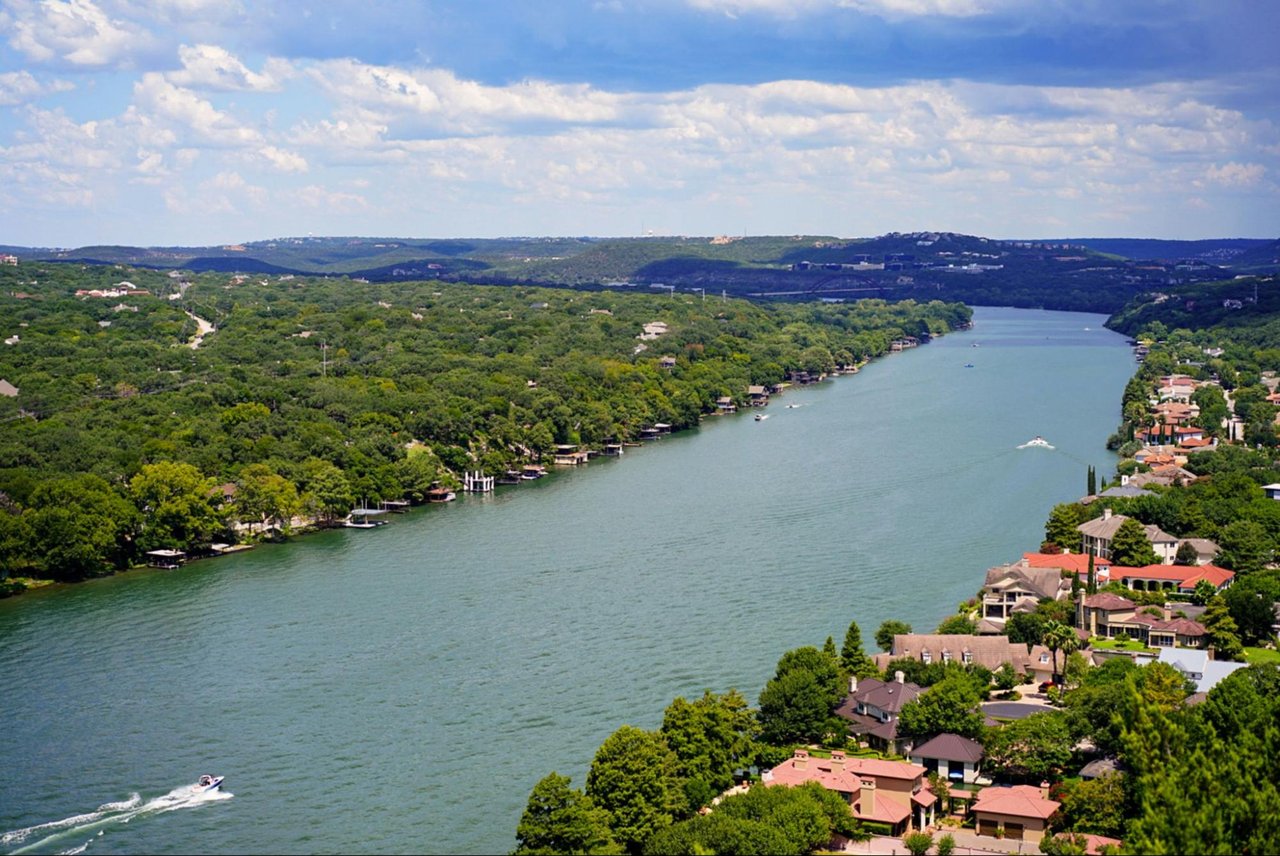
Lake Austin is designed as a constant-level lake, which means it maintains far more stable water levels than Lake Travis. That reliability is a big part of why it commands some of the highest waterfront prices in the city. Neighborhoods like Tarrytown, West Lake Hills, Rob Roy, and the gated communities of Watersedge and The Island at Mount Bonnell line its shores, with luxury estates regularly priced into the multi-millions.
Lake Travis sits about 30 minutes from downtown and offers a wider range of price points, from waterfront condos to large luxury estates. Communities like Lakeway, Rough Hollow, Hudson Bend, and The Hollows in Jonestown each have their own character and amenity profile. Steiner Ranch, a 4,600-acre master-planned community situated between Lake Austin and Lake Travis, draws buyers who want structured amenity living with private lake access.
Notable Waterfront Communities to Know
- Tarrytown — historic Lake Austin neighborhood with Craftsman cottages and multi-million-dollar estates
- West Lake Hills — hillside enclave with direct Lake Austin access and commanding views
- Rough Hollow — Lake Travis master-planned community with a yacht club and marina on the south shore
- Hudson Bend — more secluded Lake Travis pocket with a mix of cabins and luxury properties
- The Hollows — gated Lake Travis community in Jonestown with deep-water marina access on the north shore
- Steiner Ranch — 4,600-acre community between both lakes with a private Lake Club and boat launch
Understand the Regulatory Landscape
Waterfront property in Austin, TX, comes with a regulatory environment that buyers often underestimate. The Lower Colorado River Authority — the LCRA — is the primary permitting authority for docks and buoys on Lake Austin. Any dock construction, modification, or new installation requires LCRA authorization before work begins.
Jurisdiction matters too. Whether a property sits inside City of Austin limits or in unincorporated Travis County determines which building, septic, and floodplain rules apply — and those rules differ. FEMA flood maps govern elevation requirements and insurance needs, and projects in the 25-year or 100-year floodplain require additional city review before permits are issued.
What to Verify Before You Make an Offer
- Confirm jurisdiction — City of Austin limits versus unincorporated Travis County, since rules differ significantly
- Review the title commitment for LCRA easements, deed restrictions, and recorded shoreline covenants
- Ask the seller for all existing permits, as-built drawings, surveys, and LCRA correspondence
- Check HOA covenants for dock design standards, impervious cover limits, and short-term rental restrictions
Budget for Waterfront-Specific Costs
Waterfront homes in Austin carry costs that don't apply to standard purchases. Flood insurance is the most common surprise — it's not included in a standard homeowner policy and must be purchased separately through the National Flood Insurance Program or a private insurer.
Dock condition is another area buyers overlook. An unpermitted or deteriorated dock can depress resale value and create post-closing costs that don't show up during a standard showing. Simple dock permits may process in weeks, but complex shoreline stabilization can require engineering and take months.
Costs to Plan For
- Flood insurance — separate from standard homeowner coverage and required by most lenders on waterfront properties
- Dock permits and construction — timelines vary widely depending on scope and site-specific LCRA requirements
- Specialized inspections — dock, seawall, shoreline stabilization, and any boat lifts or slips all warrant independent review
- Insurance premiums — FEMA flood zone classification, proximity to the waterline, and elevation all affect your rate
What to Look for During Your Search
Beyond price and location, a few property-specific factors carry more weight on waterfront homes in Austin than they would on a standard residential purchase. Water access type is one — there's a meaningful difference between a private dock, an HOA community boat launch, and a shared slip, both in terms of daily lifestyle and long-term value.
Lot orientation is worth attention too. South-facing lots on Lake Austin and Lake Travis tend to get more sun on the water throughout the day. Shoreline condition — erosion, vegetation loss, bank stability — is easy to miss during a showing and expensive to address after closing.
Property Features to Evaluate Carefully
- Water frontage and access type — private dock versus HOA community access versus shared slip
- Impervious cover limits — many Austin waterfront lots restrict how much of the lot can be paved or built upon
- Shoreline condition — erosion and bank stability affect both current value and future ownership costs
- Lot orientation — sun exposure on the water varies significantly based on which direction the lot faces
FAQs
Do Waterfront Homes in Austin Appreciate Faster Than Inland Homes?
Waterfront homes in Austin tend to hold value well and often appreciate at a stronger rate than comparable inland properties, particularly on Lake Austin where stable water levels and limited inventory create sustained demand. Appreciation still depends on the specific lake, neighborhood, and property condition.
What Is the LCRA and Why Does It Matter for Waterfront Buyers?
The Lower Colorado River Authority regulates docks, buoys, and shoreline use on Lake Austin and the other Highland Lakes. Any dock construction or modification requires LCRA approval, and buying a property with an unpermitted structure can create legal and financial complications after closing.
Do I Need Flood Insurance on a Waterfront Home in Austin?
Most lenders require flood insurance on waterfront properties, and it's worth carrying even when it isn't mandated. Standard homeowner policies do not cover flood damage, and coverage is available through the National Flood Insurance Program or private insurers.
Contact Soomin Kim Today
Buying waterfront property in Austin, TX, is one of the most rewarding real estate decisions you can make — and one of the most detail-intensive. The due diligence process on a lakefront purchase is meaningfully different from a standard transaction, and having the right agent in your corner matters.
I've helped buyers across Lake Austin, Lake Travis, and the surrounding Hill Country communities find the right property and navigate the process without surprises. Reach out to me, Soomin Kim, and let's talk about what waterfront living in Austin looks like for you.