If you want lake access, a quieter suburban pace, and a home base that still keeps you connected to Austin, Lakeway probably keeps showing up on your list for a reason. But a beautiful setting alone does not make a place the right fit for your daily life, budget, or long-term plans. If you are weighing a move to Lakeway, this guide will help you understand what living there really feels like, what kinds of homes you can expect, and who tends to feel most at home there. Let’s dive in.
What Lakeway Is Like
Lakeway is a western Travis County suburb on the south shore of Lake Travis, about 25 miles west of downtown Austin. According to the city, it began as a retirement and second-home community and has grown into a place that attracts a wider mix of buyers.
Today, Lakeway is known for a resort-style feel shaped by natural beauty, recreation, parks, greenbelts, and a strong connection to the lake. The city also describes its vision as serving different ages and household types, which helps explain why the area appeals to everyone from young professionals to move-up buyers and empty-nesters.
Why Buyers Consider Lakeway
For many buyers, Lakeway stands out because it offers more than just houses. It offers a lifestyle centered around outdoor recreation, community spaces, and a little more breathing room than you may find closer to central Austin.
If you are looking for a place where weekends can include parks, lake time, clubs, and golf, Lakeway has a clear identity. It is especially appealing if you want that lifestyle without feeling completely disconnected from the broader Austin metro.
Outdoor Living Is a Big Part of Life
Lakeway leans heavily into outdoor living. City Park is a 64-acre waterfront park at 502 Hurst Creek Road, and the city notes that it includes nearly two miles of trails.
That matters if you want regular access to green space and time outside close to home. The city also states that local parks are free and open to the public, which makes those everyday amenities easier to enjoy.
Golf, Clubs, and Community Events Add Variety
Lakeway also has a long-standing golf and club culture. The city describes the area as a resort community with golf courses and marinas, and it even allows golf carts and certain low-speed utility vehicles on some public streets.
That does not mean every resident lives a country-club lifestyle, but it does show how recreation is built into the local culture. The Lakeway Activity Center adds another layer, with classes, concerts, town hall meetings, club meetings, and recurring social groups that create ways to plug into the community.
Is Lakeway Walkable?
This is where expectations matter. Lakeway is not best described as fully walkable in the urban sense, but it does have walkable pockets.
Places like Oaks at Lakeway and the planned Square at Lakeway are designed to create more pedestrian-friendly gathering areas with shopping, dining, and community space. The city’s plans for the Square at Lakeway include retail, residential units, a park area, a pavilion, and a section of Main Street, which points to a more connected mixed-use environment in select nodes.
What That Means for Daily Life
In practical terms, Lakeway is still a car-oriented suburb. You may be able to walk within certain retail and mixed-use areas, but most day-to-day errands and commuting will still depend on driving.
If you are hoping for dense urban walkability, Lakeway may not check that box. If you are comfortable with a suburban setup that includes a few convenient walkable hubs, it may feel like a strong middle ground.
What Homes in Lakeway Look Like
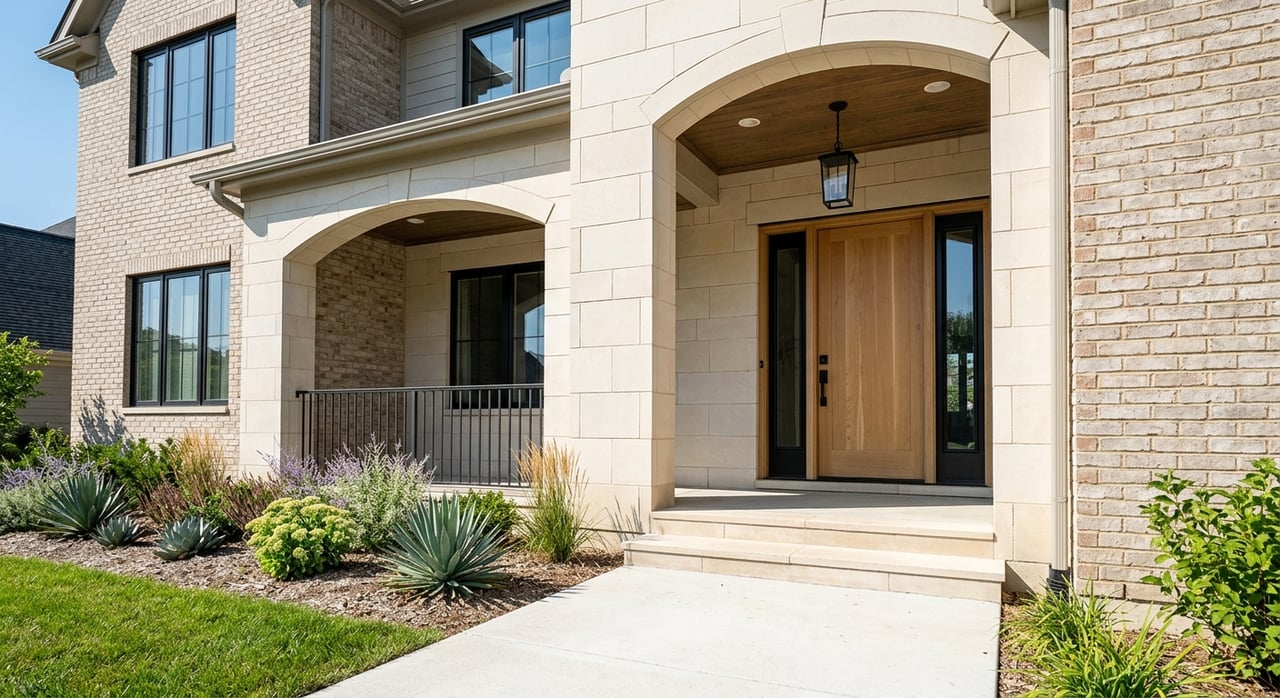
Lakeway is not a one-size-fits-all market. While single-family homes remain the dominant housing type, the city’s planning documents also make room for townhomes, condominiums, and limited multifamily in more appropriate locations, including along the RM 620 corridor.
That variety is helpful if you are entering the market at different price points or looking for a lower-maintenance option. It also means buyers can often find more than one path into the area, depending on their goals.
Price Ranges to Expect
Current market data place Lakeway in the upper-middle to upper-end suburban range. Zillow reports an average home value of about $746,510 and a median sale price of $679,583 as of March 31, 2026, while Redfin’s March 2026 snapshot shows a median sale price near $678,000.
At the same time, Realtor.com lists a median listing price around $850,000. That suggests sold prices are clustering in the high-$600,000s, while asking prices often sit higher, closer to the mid-$800,000s.
Entry Points and Premium Segments
Lakeway does offer range within that broader pricing picture. Current listing examples include attached homes in the low-$300,000s to $400,000s, along with single-family homes in the high-$700,000s and well above $1 million.
There is also a clear premium for homes with lake views. So if your wish list includes scenery, outdoor living, and a stronger visual connection to Lake Travis, you should expect that feature to push pricing higher.
Who Lakeway Fits Best
Lakeway tends to work well for buyers who want recreation built into everyday life. If your ideal routine includes parks, lake access, social clubs, golf, and a quieter setting than central Austin, Lakeway lines up well with those priorities.
It can also make sense if you want a suburb with a strong sense of place rather than a purely functional bedroom community. The city’s long-term vision emphasizes connectivity, transportation choice, and a diverse housing stock, which supports a broader range of lifestyles than its earlier identity might suggest.
Good Fit for Relocating Buyers
If you are relocating from out of state, Lakeway can be appealing because it offers a very distinct lifestyle. It is easier to picture what life could look like there because the identity is so clear: lake living, recreation, scenic surroundings, and a community-oriented feel.
That kind of clarity helps when you are trying to compare Austin-area suburbs from a distance. Instead of choosing only by square footage or price, you can ask whether the day-to-day lifestyle in Lakeway matches how you actually want to live.
Good Fit for Move-Up Buyers
Lakeway can also be a smart option for move-up buyers who want more space and a stronger amenity base. Since single-family homes remain the dominant housing type, the area offers plenty of opportunities for buyers looking for a later-stage home in an established suburban setting.
The local appeal also includes Lake Travis ISD for buyers who are factoring school district boundaries into their search. As always, it is best to verify attendance and enrollment details directly with the district when comparing homes.
Tradeoffs to Think About
Every location has tradeoffs, and Lakeway is no exception. The biggest one is that it is still suburban and corridor-dependent.
Lakeway sits about 25 miles west of downtown Austin, and RM 620 functions as the main commercial corridor. The city also maintains information about the 620 widening project, which is a reminder that access and traffic are ongoing parts of the local conversation.
Commute and Convenience Matter
If your top priority is the shortest possible commute into central Austin, Lakeway may feel less convenient than closer-in neighborhoods. If your top priority is having more lifestyle amenities near home and accepting a more suburban transportation pattern, that tradeoff may feel worth it.
This is why Lakeway is often a better match for buyers who prioritize environment and lifestyle over dense urban access. The right answer depends on what matters most in your routine, not just what looks good on paper.
Questions to Ask Before You Move
If you are seriously considering Lakeway, ask yourself a few simple questions:
- Do you want lake access, parks, and recreation to be part of everyday life?
- Are you comfortable living in a car-oriented suburb with a few walkable pockets rather than full urban walkability?
- Does your budget align with a market where many closed sales are in the high-$600,000s, but listing prices often trend higher?
- Are you open to different housing types, from condos and townhomes to larger single-family homes?
- Would a quieter, amenity-rich setting feel like an upgrade from your current location?
Your answers will usually tell you a lot faster than any marketing description can.
So, Is Lakeway the Right Next Home for You?
Lakeway is a strong choice if you want a suburban lifestyle with personality. It offers lake proximity, parks, recreation, golf, community gathering spaces, and a housing mix that gives buyers more options than many people expect.
It is probably not the best fit if you want an urban grid, broad walkability, or the easiest daily access to downtown Austin. But if you want scenic surroundings, a quieter pace, and a community where outdoor living plays a major role, Lakeway deserves a serious look.
If you want help comparing Lakeway with other Austin-area suburbs or narrowing down the right fit for your move, reach out to Soomin Kim for a free consultation.
FAQs
Is Lakeway, Texas, a good place for buyers who want outdoor amenities?
- Yes. Lakeway is known for parks, greenbelts, lake access, golf, marinas, and community recreation, including City Park with nearly two miles of trails.
Is Lakeway, Texas, walkable for daily errands?
- Lakeway is better described as pocket walkable than fully walkable. Areas like Oaks at Lakeway and the planned Square at Lakeway offer more pedestrian-friendly environments, but most daily life still depends on a car.
What types of homes can you buy in Lakeway, Texas?
- Lakeway includes single-family homes, townhomes, condominiums, and some limited multifamily options in appropriate locations, with single-family homes still being the dominant housing type.
What is the typical home price in Lakeway, Texas?
- Recent data show median sale prices near the high-$600,000s, while median listing prices are often higher, around the mid-$800,000s.
Is Lakeway, Texas, a good fit for relocating buyers?
- It can be, especially if you want a clearly defined suburban lifestyle centered on lake living, recreation, community amenities, and proximity to Austin without living in the urban core.