This Austin, Texas neighborhood guide is your complete resource for understanding one of America's most dynamic, most diverse, and most rapidly evolving real estate markets. From the limestone bluffs above Lake Austin where estates list at $15M and above, to the walkable urban grid of Travis Heights and Bouldin Creek, to the master-planned communities of Cedar Park and Georgetown that have absorbed hundreds of thousands of new residents over the past decade — Austin's neighborhoods are not a single story but dozens of them, each with its own character, price point, and lifestyle identity.
Soomin Kim serves Austin buyers and sellers from her office at 9600 Great Hills Trail in Northwest Austin — one of the city's most active residential corridors, positioned between the Arboretum, the Domain, and the Hill Country communities that have defined so much of Austin's growth. This neighborhood guide reflects the depth of local knowledge she brings to every client relationship.
Austin is the Live Music Capital of the World, a James Beard Award-winning food city, home to the University of Texas and a concentration of tech industry headquarters that rivals Silicon Valley — and it sits in the middle of the Texas Hill Country, where limestone cliffs drop to clear spring-fed lakes and the landscape reminds you that this is genuinely one of the most beautiful places in America to build a life.
Austin, Texas is the state capital of Texas and the seat of Travis County — a city of 967,862 residents with a median age of 34.5 that has grown by more than 400,000 people since 2000, making it one of the fastest-growing large cities in the United States by both percentage and absolute numbers. That growth is the defining fact of the Austin real estate market and the defining experience of the city's residents: Austin is perpetually, gloriously unfinished, always becoming something new while protecting the cultural DNA — the music, the outdoor lifestyle, the keep-Austin-weird spirit — that made people want to move here in the first place.
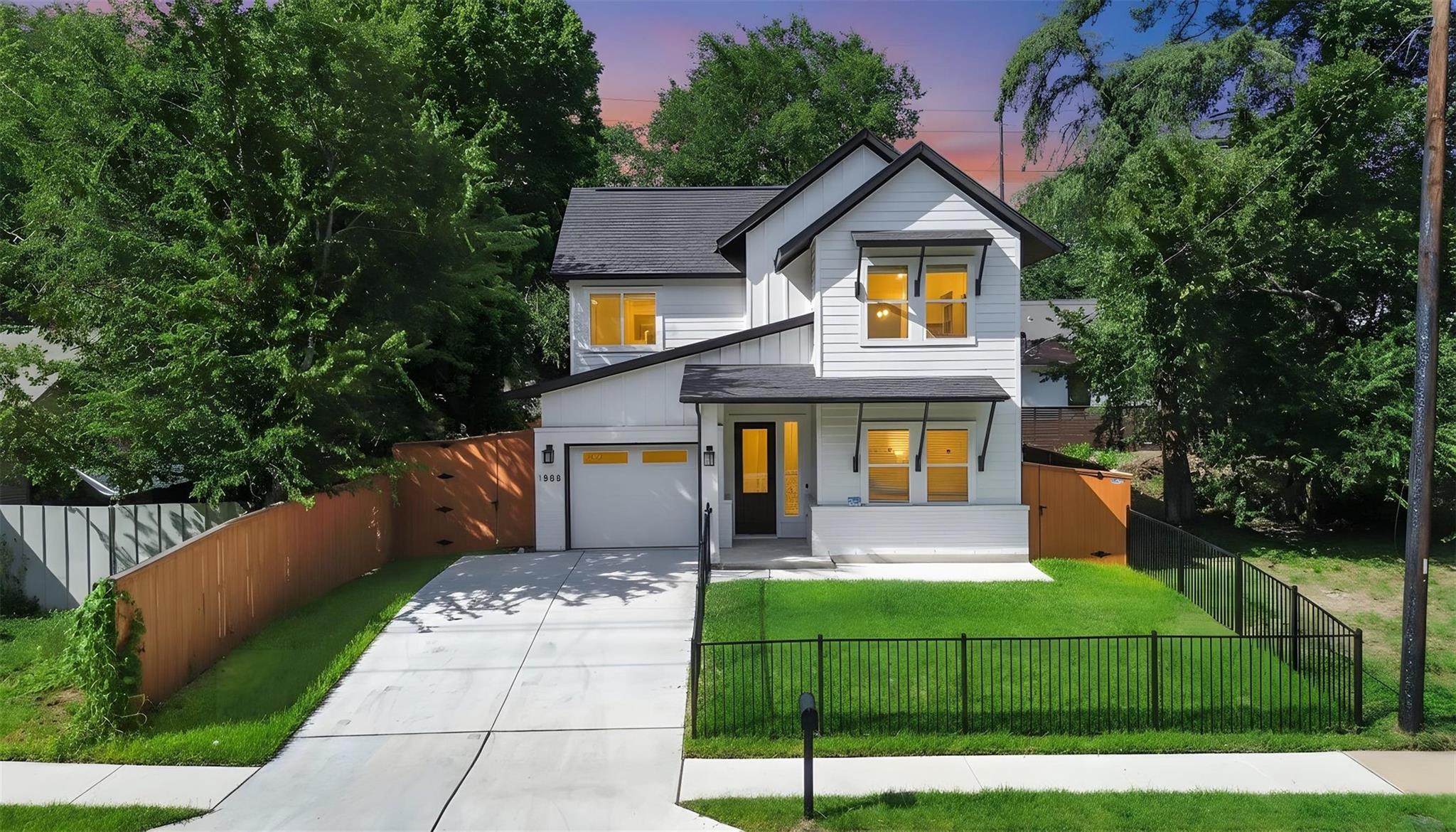
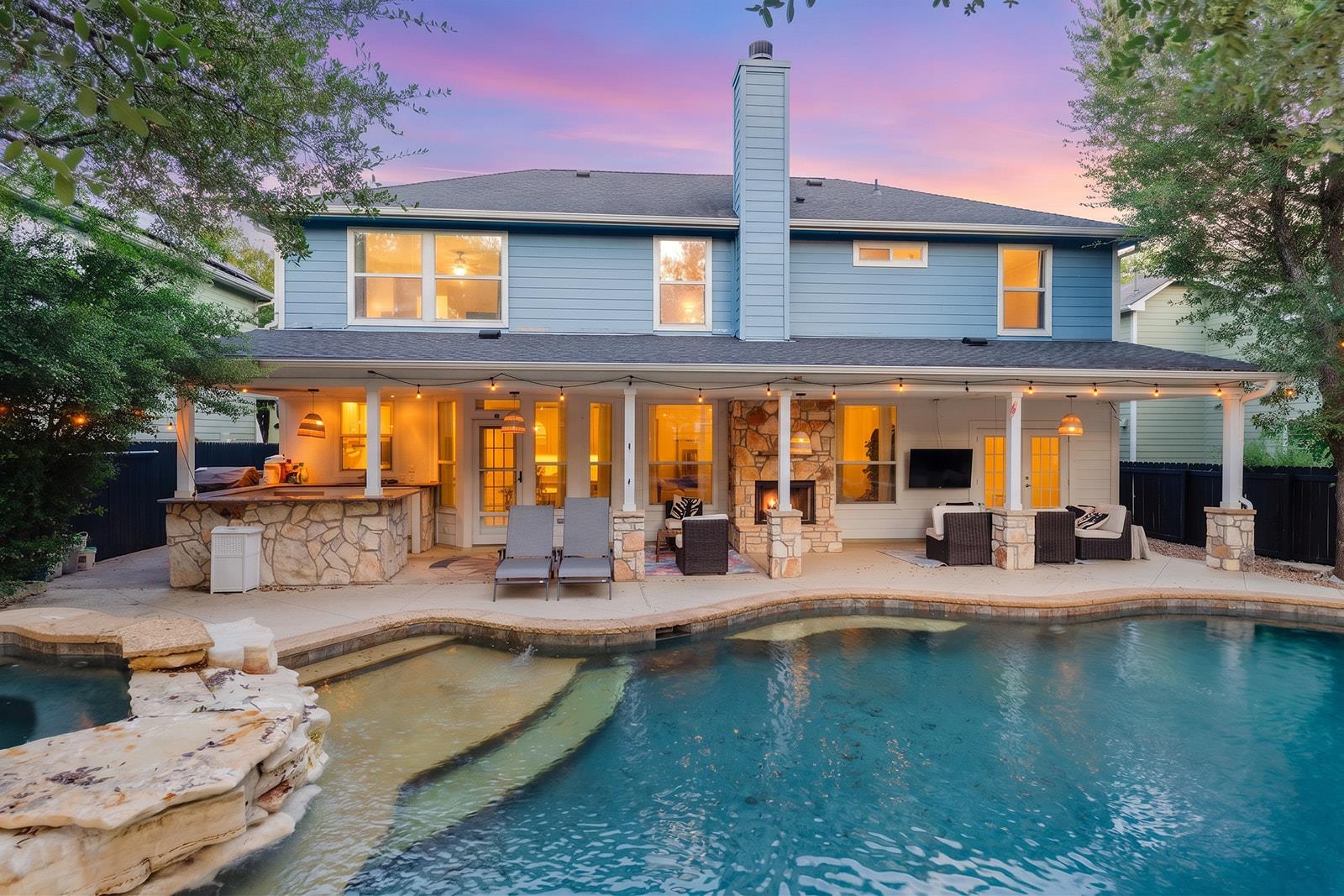
The city's economic engine has transformed significantly over the past fifteen years. Austin was always anchored by the University of Texas, the state government, and a creative/music industry. Today it is also home to Apple's second-largest campus in the world, Tesla's global headquarters and Gigafactory, Samsung's semiconductor manufacturing, Dell Technologies' global HQ, Oracle's headquarters, and the Austin offices of Google, Amazon, Meta, and dozens of other technology companies that have collectively added hundreds of thousands of high-paying jobs to the metro area. This technology influx explains the luxury real estate market visible in Soomin's active listings — estates at $15M, $19M, $20M, and $25M in a city where the median individual income is $59,427 — a dramatic illustration of the income polarization that rapid technology industry growth produces.
For buyers, the Austin neighborhood guide that follows is organized around the most important recognition: Austin is not one place. It is at minimum a dozen distinctly different residential experiences within a single metropolitan boundary, each requiring its own framework for evaluation. The guide covers them with the specificity that buyers deserve.
Austin's neighborhoods each tell a different story. Here is the buyer-level breakdown that the Austin neighborhood guide requires:
Downtown Austin is the city's urban core — the Congress Avenue corridor, the Sixth Street entertainment district, and the Rainey Street bar and restaurant scene that has redefined what a Texas downtown can feel and look like. Real estate here is primarily high-rise condominiums, from boutique mid-rise buildings to full luxury towers with rooftop pools and Lady Bird Lake views. Buyers choose downtown for walkability, nightlife access, and the specific urban energy that no other Austin neighborhood quite replicates. Pricing ranges from $400,000 for well-located smaller units to $5M+ for full-floor penthouse residences.
South Austin's most established and most coveted neighborhoods sit south of Lady Bird Lake — Travis Heights' Victorian and Craftsman bungalows on tree-lined streets, Bouldin Creek's walkable blocks of renovated mid-century homes, and the South Congress commercial corridor's locally owned boutiques, restaurants, and galleries. This is old Austin — the neighborhoods that define the Keep Austin Weird identity — and they command significant premiums for it. Single-family homes here range from $700,000 for original condition bungalows to $2.5M+ for renovated and expanded properties on the better streets.
Tarrytown and Pemberton Heights are Austin's most established luxury neighborhoods — the areas west of MoPac (Loop 1) where Austin's most prominent families have lived for generations, where the live oak canopy is mature and irreplaceable, and where properties range from original mid-century homes to substantial new construction luxury residences priced from $1.5M to $8M+. Proximity to Downtown (10 minutes), to Mopac, and to the Lake Austin waterfront gives these neighborhoods a location premium that sustains values through market cycles.
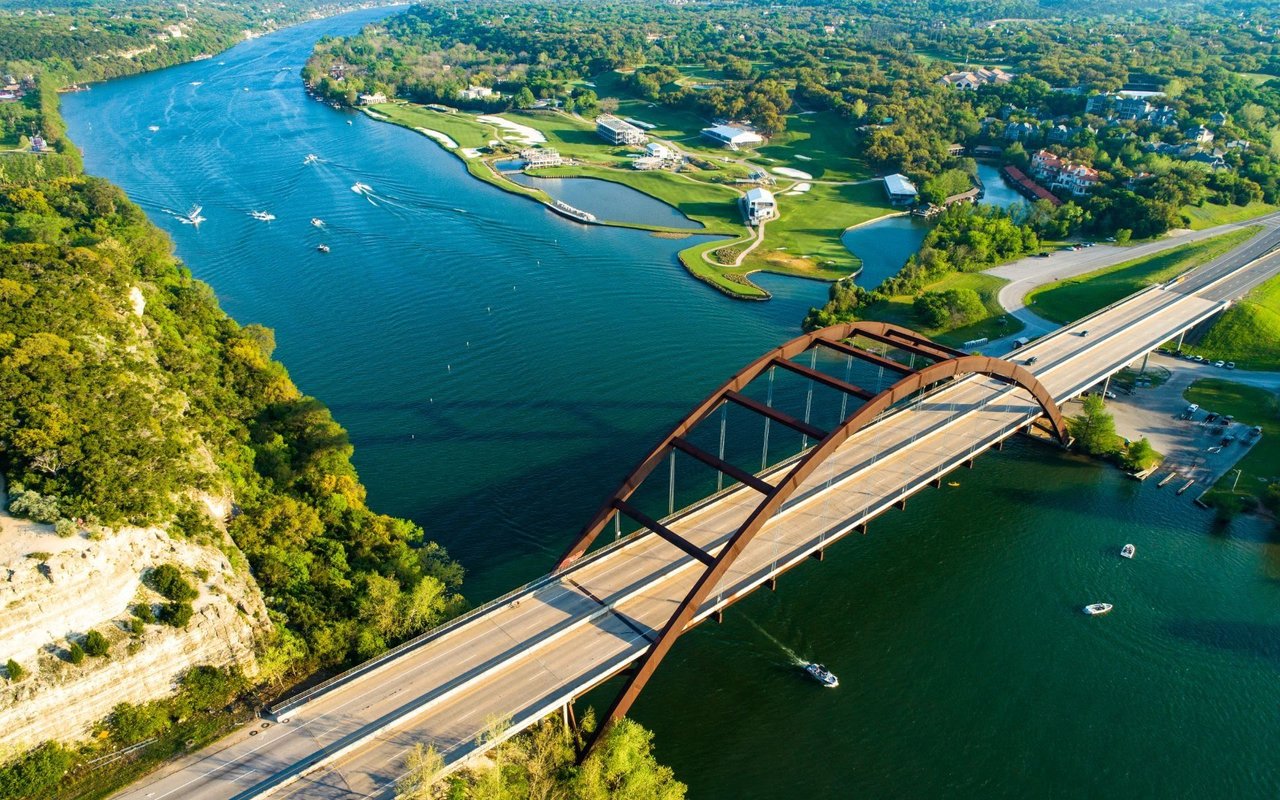
The Lake Austin waterfront and the Westlake Hills area above it represent the apex of Austin residential real estate — Lake Austin estates with private boat docks, Hill Country views, and the specific luxury that only waterfront living on a spring-fed Texas lake delivers. Active listings in this corridor regularly reach $15M, $19M, and $25M, reflecting a buyer pool of technology executives, venture capitalists, and ultra-high-net-worth buyers who have chosen Austin as their Texas base. Westlake High School, one of Texas's most academically celebrated public schools, anchors family demand for the Westlake Hills area above the lake.
Northwest Austin's Domain area has become the city's de facto second downtown — a mixed-use district anchored by the Domain Northside mall, the Apple campus, and the concentration of technology company offices that line Research Boulevard and the Mopac corridor north. The residential neighborhoods surrounding the Domain attract tech professionals who want to live near their employers: modern condominiums, townhomes, and single-family homes in price ranges from $450,000 to $1.2M+. Soomin's office at 9600 Great Hills Trail sits in this corridor, reflecting deep knowledge of Northwest Austin's residential market.
Cedar Park and Leander represent the northern arc of Austin's suburban growth — master-planned communities with excellent Leander ISD schools, new construction options, and the suburban amenity package (pools, trails, community centers, retail) that families relocating from other Texas markets often prioritize. The MetroRail line provides light rail access to downtown Austin from the Leander terminus, and the continued north Austin tech corridor expansion has made both cities increasingly viable for professionals who work locally. Pricing ranges from $400,000 to $900,000 for the primary market.
Explore Soomin's Cedar Park neighborhood guide — schools, lifestyle, and what makes it one of Austin's top family suburbs
Explore Soomin's Leander neighborhood guide — the fastest-growing city in Texas and what it means for buyers
Georgetown sits about 30 miles north of Austin on I-35 — a city that has grown dramatically while maintaining the Victorian commercial architecture of its historic downtown square and the limestone Hill Country landscape character that distinguishes it from more generic suburban development. Georgetown is served by Georgetown ISD, and its combination of new construction availability, Hill Country views, and relative affordability compared to Austin proper has made it one of the most in-demand suburbs in the entire Texas market.
Explore Soomin's Georgetown neighborhood guide — the historic Hill Country city with Austin access
The Lake Travis corridor southwest of Austin — anchored by Lakeway, Rough Hollow, Bee Cave, and Spicewood — offers a different version of the Austin water lifestyle: the reservoir's expansive surface, the Hill Country terrain above the lake, and master-planned resort communities with marina access, golf, tennis, and the amenity infrastructure that families seeking the full lakefront lifestyle prioritize. Properties range from golf community homes at $600,000 to significant lake-front estates above $5M.
Explore Soomin's Lakeway neighborhood guide — Lake Travis access and Hill Country living
Explore Soomin's Rough Hollow neighborhood guide — resort-style community on Lake Travis
Santa Rita Ranch in Liberty Hill represents the best of Austin's newest master-planned development — a community that has won national awards for design, amenity programming, and community culture. Residents enjoy resort pools, event spaces, walking trails, and a community management approach that creates genuine neighborhood identity in a new development context. Liberty Hill ISD serves the community, and the continued westward expansion of the Austin tech employment base has improved the commute dynamics considerably.
Explore Soomin's Santa Rita Ranch neighborhood guide — award-winning master-planned living west of Austin
The Austin real estate market is one of the most dynamic in the United States — capable of extraordinary appreciation and equally capable of rapid recalibration, as the 2021-2022 peak and the subsequent 2023 correction demonstrated. Understanding the market's structure is essential for buyers at any price point.
Luxury waterfront estates — Lake Austin and Lake Travis frontage with private docks, Hill Country views, and the full amenity package; current active listings range from $14.75M to $25M for the most significant properties
Urban high-rise condominiums — downtown, the Rainey Street corridor, and the Domain's residential towers; $400,000 to $5M+ for full-floor penthouses
Established neighborhood single-family homes — Tarrytown, Pemberton Heights, Travis Heights, and Bouldin Creek; $700,000 to $8M+ for the most significant properties
New construction in master-planned communities — Cedar Park, Leander, Georgetown, Santa Rita Ranch, and the Hill Country suburbs; $400,000 to $1.5M for most new construction
Hill Country and Lake Travis resort communities — Lakeway, Rough Hollow, Bee Cave, and Spicewood; $600,000 to $5M+ for lakefront properties
Texas has no state income tax — a financial advantage that has driven significant migration of high-income professionals from California, New York, and Illinois to Austin specifically. For a technology executive earning $500,000 relocating from California, the annual state income tax savings alone can exceed $50,000. Combined with Texas's homestead exemption (which caps annual property tax assessment increases for primary residences), the financial case for Texas residency is compelling — and it explains a meaningful portion of the luxury buyer demand that sustains Austin's $15M+ market.
Browse Soomin's current Austin listings: Austin homes for sale
• Austin luxury homes for sale
• Austin single-family homes for sale
Austin's lifestyle is built around the specific contradiction that makes it unlike any other major American city: it is simultaneously one of the most economically powerful technology hubs in the country and one of the most laid-back, outdoor-oriented, music-saturated cities on the continent. The Apple and Tesla executives live here. The musicians and artists live here. The UT students and the retirees and the young families in the master-planned suburbs all live here. And somehow, the city has maintained a culture that values all of them — that hasn't yet fully stratified into the social isolation that technology wealth often produces in other cities.
The outdoor culture is not aspirational — it is daily and genuinely embedded. The Barton Creek Greenbelt's nine miles of urban hiking and swimming holes are accessed by thousands of Austinites on any given weekend, and by hundreds on any given Tuesday morning. Lady Bird Lake's hike-and-bike trail wraps six miles around the urban lake, crowded every morning with runners, cyclists, paddleboarders, and kayakers making the most of what Austin's position on the Colorado River provides. The Texas summers are genuinely hot — 100°F days are common from June through September — and the outdoor culture adapts accordingly: early morning, late evening, and the spring and fall shoulder seasons when Austin's climate is as close to perfect as any major American city gets.
The community values sustainability and innovation, and those aren't just marketing words. Austin has invested significantly in renewable energy infrastructure, in urban trail systems that make car-free commuting viable in parts of the city, and in a cultural support system for local music, local food, and local art that makes Austin's creative class genuinely economically viable in a way that comparable cities in more expensive coastal markets cannot sustain.
Austin's food scene has been recognized by the James Beard Foundation, Bon Appétit, Food & Wine, and virtually every national culinary publication as one of America's best — a city that produces outstanding barbecue (Franklin Barbecue, la Barbecue, Terry Black's), extraordinary Tex-Mex (Veracruz All Natural, Suerte, Comedor), and a fine dining scene anchored by chefs who have made Austin a destination in its own right rather than a stop on the way to somewhere else. The South Congress, Rainey Street, East Sixth Street, and Domain Northside corridors each have their own distinct dining personality, collectively providing the breadth that a city of nearly a million people demands.
The Live Music Capital of the World designation is not a marketing claim — it is an operational reality. Austin has more live music venues per capita than any city in the United States, and the music is on every night at hundreds of venues from the intimate clubs of Sixth Street to the full-production stages of ACL Live at the Moody Center and the Stubb's Amphitheater. South by Southwest (SXSW) in March and Austin City Limits Music Festival (ACL) in October anchor an events calendar that gives Austin a global cultural profile disproportionate to its size.
From paddleboarding on Lady Bird Lake to hiking in the Barton Creek Greenbelt, Austin's outdoor culture is one of its biggest draws. The Barton Creek Greenbelt provides miles of limestone canyon hiking with natural swimming holes accessible from multiple trailheads across South Austin. Hamilton Pool Preserve, 45 minutes west, is one of the most photographed natural swimming areas in Texas. Lake Travis's 65 miles of shoreline provide boating, wakeboarding, cliff jumping, and the lakefront resort community lifestyle that the Lake Travis corridor communities offer as a primary residential amenity.
Austin's school landscape is significantly shaped by which school district a property falls within — and in the Austin metro, that question has enormous implications for both educational quality and real estate values. The major districts serving the Austin area are:
Austin ISD serves the city of Austin proper, with over 130 schools serving approximately 73,000 students. Quality varies significantly across AISD campuses — from the magnet programs and specialized academies that attract competitive applicants from across the district, to neighborhood schools with different resource levels. Families evaluating Austin ISD properties should research specific campus assignments carefully, as the district's geographic and demographic diversity produces meaningful variation in school experience.
Eanes ISD, serving the Westlake Hills, Rollingwood, and West Lake Hills communities, is consistently rated one of Texas's top school districts. Westlake High School has produced multiple state championship athletic programs and consistently high college placement outcomes. Eanes ISD is the primary reason the Westlake Hills real estate market commands premiums over comparably positioned Austin properties, and it is a decisive factor for the technology executive families who dominate that market.
Leander ISD serves Cedar Park, Leander, and portions of northwest Austin — a district that has managed exceptional growth while maintaining strong academic standards and top school ratings. Cedar Park High School, Vandegrift High School, and Vista Ridge High School are all well-regarded campuses that attract families who have made Leander ISD a primary reason for choosing the northern suburbs over Austin proper.
Each of the major suburban communities surrounding Austin is served by its own independent school district — Georgetown ISD, Liberty Hill ISD (serving Santa Rita Ranch and the Liberty Hill corridor), and Lake Travis ISD (serving the Lake Travis corridor communities from Lakeway to Spicewood). All three are well-regarded districts that serve as significant draws for the family buyers who make up each community's primary demographic. Soomin can provide specific school boundary information for any address across the Austin metro area.
The best Austin neighborhood depends entirely on your lifestyle, budget, and priorities. For urban walkability and nightlife access: Downtown, Rainey Street, South Congress. For established Austin character with mature tree canopy: Tarrytown, Pemberton Heights, Travis Heights, Bouldin Creek. For waterfront luxury: Lake Austin corridor, Westlake Hills. For tech industry proximity: Northwest Austin, Domain area, Cedar Park. For family-oriented suburbs with strong schools: Cedar Park (Leander ISD), Georgetown, Georgetown ISD, Lake Travis communities. Soomin's neighborhood guides for all of these communities provide the buyer-level detail needed to make an informed comparison.
Austin real estate spans an extraordinary range. Entry-level condominiums start around $350,000-$450,000 in suburban areas. Established neighborhood single-family homes in Central Austin typically start at $700,000-$900,000. Westlake Hills and premium South Austin addresses range from $1.5M to $8M+. The Lake Austin waterfront luxury market runs $15M to $25M+ for the most significant properties — as reflected in Soomin's current active listings. New construction in master-planned suburbs like Cedar Park, Georgetown, and Santa Rita Ranch is typically available from $450,000-$900,000. Soomin provides detailed market analysis for any specific area or property type on request.
Austin consistently ranks among the best places to live in the United States — recognized by U.S. News & World Report, Livability.com, and national media for its combination of economic opportunity (particularly in technology), outdoor recreation, cultural richness (live music, food, arts), warm climate, and no state income tax. The city's rapid growth has created challenges — traffic congestion, affordability pressures, and infrastructure strain — that are important to evaluate alongside the benefits. The specific neighborhood within Austin shapes the lived experience considerably; this neighborhood guide is designed to help buyers identify which Austin best fits their priorities.
Texas has no personal state income tax — one of the most significant financial advantages for high-income buyers relocating from California, New York, Illinois, or other high-tax states. For an individual earning $400,000 annually, the annual tax savings of establishing Texas residency can exceed $40,000 compared to California. Texas does not have an estate tax or inheritance tax. Property taxes in Texas are generally higher than the national average (reflecting the absence of income tax), but the homestead exemption caps annual assessment increases for primary residences. For the technology executives and high-income professionals who drive Austin's luxury real estate market, the Texas tax environment is a primary financial motivation for relocation.
Soomin Kim brings a distinctive combination to the Austin real estate market: deep local knowledge of Austin's most diverse and complex real estate landscape, personal experience navigating the city's technology-driven luxury market, and a team approach that provides buyers with resources across the full Austin metro area — from downtown condos to Lake Austin estates to the northern and western suburbs. Her office at 9600 Great Hills Trail in Northwest Austin positions the team at the intersection of the tech corridor, the Hill Country suburban communities, and the full Austin market. Contact Soomin at (714) 926-5730 to discuss your Austin real estate goals.
Working with Soomin is more than just a transaction — it's a meaningful and impactful journey. Soomin understands that the Austin real estate process can be emotional and challenging, particularly in a market as complex and fast-moving as this one. Whether you are navigating Austin's luxury Lake Austin corridor, evaluating the city's suburban school districts for your family, comparing downtown condos to Hill Country estates, or investing in Austin's continued growth — Soomin brings the trusted guidance, market expertise, and personal commitment that her clients consistently describe as the defining quality of their experience.
Let's connect and begin your Austin real estate journey with confidence.
967,862 people live in Austin, where the median age is 34.5 and the average individual income is $59,427. Data provided by the U.S. Census Bureau.
Total Population
Median Age
Population Density Population Density This is the number of people per square mile in a neighborhood.
Average individual Income
Austin has 440,294 households, with an average household size of 2.14. Data provided by the U.S. Census Bureau. Here’s what the people living in Austin do for work — and how long it takes them to get there. Data provided by the U.S. Census Bureau. 967,862 people call Austin home. The population density is 3,025 and the largest age group is Data provided by the U.S. Census Bureau.
Total Population
Population Density Population Density This is the number of people per square mile in a neighborhood.
Median Age
Men vs Women
Population by Age Group
0-9 Years
10-17 Years
18-24 Years
25-64 Years
65-74 Years
75+ Years
Education Level
Total Households
Average Household Size
Average individual Income
Households with Children
With Children:
Without Children:
Marital Status
Blue vs White Collar Workers
Blue Collar:
White Collar:
Get in Touch with Soomin Kim